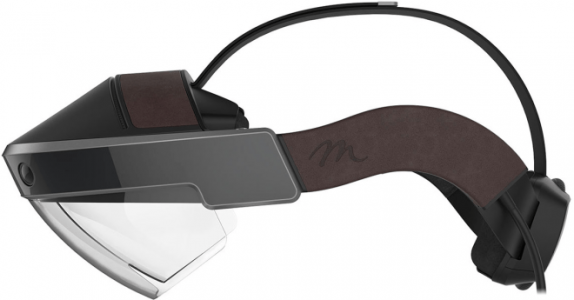
 Google is said to be working on a standalone AR headset, and the project is for now codenamed Google A65. Now we are having more details about the project; according to the reports from Winfuture.de who claims to have documents that indicate Google's working with Taiwanese manufacturer Quanta on the AR headset. Going back in time, Google has a working history with Quanta for Pixel C tablet. The new VR headset said to feature camera sensors, microphones with a possibility to operate the headset with Google Assistant. It is said to have a custom quad-core internet-of-things-focused Qualcomm QSC603 that is based on the ARM Cortex-A75. The processor has support up to 2,560 x 1,440 resolution (WQHD), 1080p and 1030p video capture, 3D overlays and rendering interfaces OpenGL, OpenCL and Vulcan, Gigabit wireless, Bluetooth 5.1 and GPS. Furthermore, it also supports the Android Neural Networks API. However, it looks like the headset will still need to be wired to a computer despite wireless mixed-reality headsets becoming available. Google declined to comment on the new development right away. Source
Saturday, 19 May 2018
Google said to be working on a standalone AR headset with camera sensors, customized Qualcomm QSC603 chip
Google is said to be working on a standalone AR headset, and the project is for now codenamed Google A65. Now we are having more details about the project; according to the reports from Winfuture.de who claims to have documents that indicate Google's working with Taiwanese manufacturer Quanta on the AR headset. Going back in time, Google has a working history with Quanta for Pixel C tablet. The new VR headset said to feature camera sensors, microphones with a possibility to operate the headset with Google Assistant. It is said to have a custom quad-core internet-of-things-focused Qualcomm QSC603 that is based on the ARM Cortex-A75. The processor has support up to 2,560 x 1,440 resolution (WQHD), 1080p and 1030p video capture, 3D overlays and rendering interfaces OpenGL, OpenCL and Vulcan, Gigabit wireless, Bluetooth 5.1 and GPS. Furthermore, it also supports the Android Neural Networks API. However, it looks like the headset will still need to be wired to a computer despite wireless mixed-reality headsets becoming available. Google declined to comment on the new development right away. Source


-
Here are the social profile links that I have worked on for Backlinks https://docs.google.com/presentation/d/1gAvVQYafqO_jWsSIz3N95Sy3q5KAx...
-
The Optimus L4 II E440 owners may also want to keep their device up-to-date. So we thought of giving you a tutorial of how to upgrade Opt...
-
Vivo launched the vivo V17 smartphone late last year in India with a Super AMOLED display, 32MP in-screen camera, and more. The successor t...
