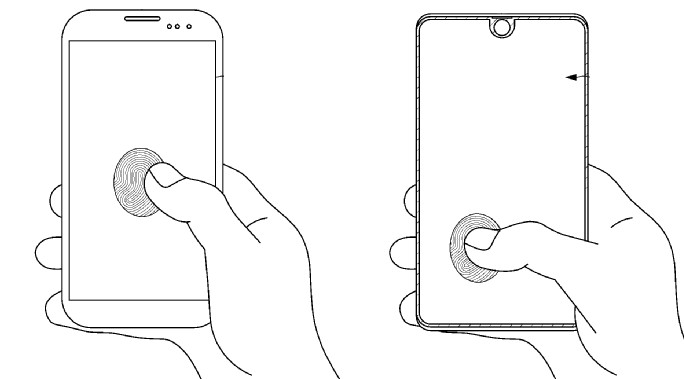
 Samsung has filed a patent with the USPTO and WIPO which is a method for acquiring biometric information and electronic device supporting the same’. The patent was published on October 18, 2018. Unlike the regular optical in-display fingerprint scanner, Samsung has patented a new technology that makes it possible to use the entire display as a fingerprint scanner. The patent describes a Samsung smartphone with one or two processors; a main processor and a second low-power processor which will control the biometric sensor, the touch sensor, and the lighting sensor. The 2nd processor can perform all tasks independently as long as the smartphone is locked. The main processor can remain in sleep mode and thus save on battery consumption. Once the touch is detected on the screen, the brightness of the display will be increased and post which a three scan authentication is done at different brightness levels. The information gathered will be combined for a more reliable authentication. This technique would also make it possible to scan a wet or dirty finger. For the three scans, the smartphone needs 60 to 90 milliseconds. The processor needs 200 to 300 milliseconds in between to adjust the brightness. However, the patent description doesn't give any ...
Tuesday, 23 October 2018
Samsung patent hints at a full-screen fingerprint scanner
Samsung has filed a patent with the USPTO and WIPO which is a method for acquiring biometric information and electronic device supporting the same’. The patent was published on October 18, 2018. Unlike the regular optical in-display fingerprint scanner, Samsung has patented a new technology that makes it possible to use the entire display as a fingerprint scanner. The patent describes a Samsung smartphone with one or two processors; a main processor and a second low-power processor which will control the biometric sensor, the touch sensor, and the lighting sensor. The 2nd processor can perform all tasks independently as long as the smartphone is locked. The main processor can remain in sleep mode and thus save on battery consumption. Once the touch is detected on the screen, the brightness of the display will be increased and post which a three scan authentication is done at different brightness levels. The information gathered will be combined for a more reliable authentication. This technique would also make it possible to scan a wet or dirty finger. For the three scans, the smartphone needs 60 to 90 milliseconds. The processor needs 200 to 300 milliseconds in between to adjust the brightness. However, the patent description doesn't give any ...


-
Here are the social profile links that I have worked on for Backlinks https://docs.google.com/presentation/d/1gAvVQYafqO_jWsSIz3N95Sy3q5KAx...
-
Yi technology, the company which is backed by Xiaomi recently launched products like Yi Home Camera 3, Yi Action Camera, Yi Home Security C...
-
Micromax just launched Bharat GO, the company's first Android Oreo (Go Edition) smartphone in India, in partnership with Airtel. It was...

